
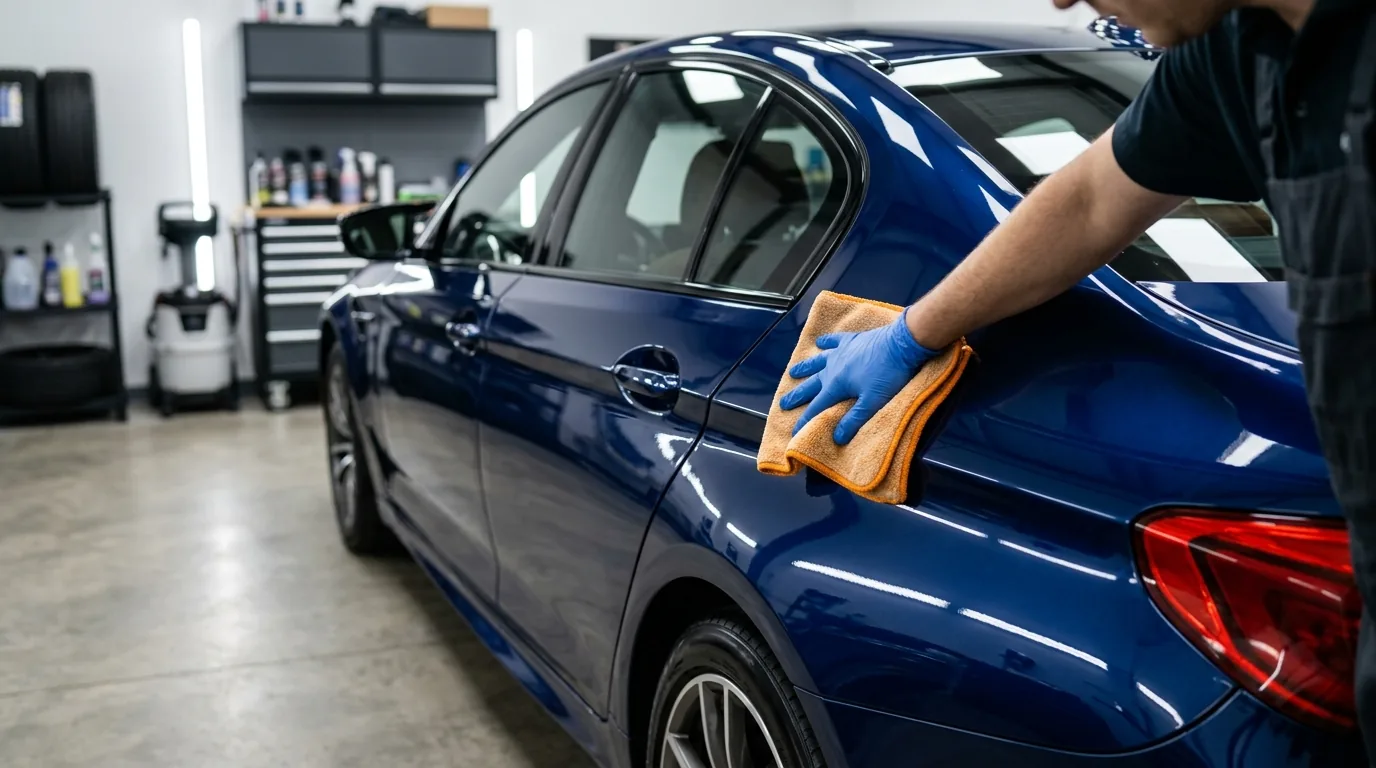
Whether you're selling privately, trading in at a dealer, or getting a cash offer, a little preparation before inspection can add hundreds — sometimes thousands — to your final payout. These steps take a few hours and cost very little.
1. Thoroughly Clean the Interior
The interior condition strongly influences a buyer's initial impression and perceived value. Spend time on:
- Vacuuming all carpet, seats, boot, and mats thoroughly
- Wiping down the dashboard, door cards, and centre console with an appropriate interior cleaner
- Cleaning the inside of all windows to remove haze and smear
- Removing all personal items, rubbish, and air fresheners
A clean interior signals that the car has been well cared for — which translates directly into buyer confidence and a higher offer.
2. Wash and Detail the Exterior
A freshly washed, waxed exterior makes a car look significantly younger than its age. Focus on:
- Hand washing the body, roof, and door sills
- Cleaning alloy wheels (brake dust accumulation makes wheels look old)
- Dressing tyres with a tyre shine product
- Touching up any minor scuffs with matching touch-up paint from the dealer
You don't need a professional detail — a $2 car wash sponge and a $15 bottle of wax can make a remarkable difference.
3. Compile All Service Records and Logbooks
Service history is the most important documentation a seller can provide. Locate and compile:
- The vehicle's logbook with all stamp entries
- Any loose invoices from servicing or repairs
- Receipts for recent work (tyres, brake pads, timing belt)
- Any warranty documents
A complete service history from an authorised dealer adds the most value. Even a partial history from an independent workshop is significantly better than none.
4. Address Minor Issues Before Inspection
Fix the cheap, visible problems that disproportionately affect buyer perception:
- Replace any blown globes (headlights, tail lights, interior lights)
- Top up all fluids (washer fluid, coolant, oil)
- Inflate tyres to the correct pressure
- Replace a flat spare if one is present in the boot
Preparation can make a used-car assessment clearer, but it does not guarantee a higher offer. For a scrap or non-running vehicle, avoid spending money on repairs or detailing solely to request a valuation.
5. Be Honest About Known Issues
Trying to hide known problems from a buyer — particularly structural damage, mechanical faults, or accident history — can have legal consequences. Disclose known issues upfront and let them be priced in. Professional buyers value honesty and will still make an offer.
Preparation is the highest-return activity you can do before selling. A few hours of effort routinely returns $200–$800 in added offer value.
Considering a sale? Read our used-car buying guidance, or find your service area before requesting an assessment. Collection and payment terms are confirmed for your vehicle.
Ready to sell your car?
Free quote in 60 seconds. Paid on the spot. Free towing included.
📞 Call 0450 849 619